Introduction: Evolving Scrutiny in Investment Rounds
For SaaS business owners, securing investment is a pivotal moment, but it’s rarely a one-off event. As your company grows, so too do the expectations of potential investors. While your initial funding might have focused on validating your idea and product-market fit, subsequent rounds will delve much deeper into the operational and technical realities of your business. A crucial part of this evolving scrutiny is technical due diligence, a process that shifts significantly in scope and depth as you move from seed and angel rounds to Series A, B, and beyond. Understanding these changing demands is not just about passing an audit; it’s about strategically building a robust, scalable, and secure product that continuously attracts capital and delivers value.
Understanding the Shifting Landscape of Investor Expectations
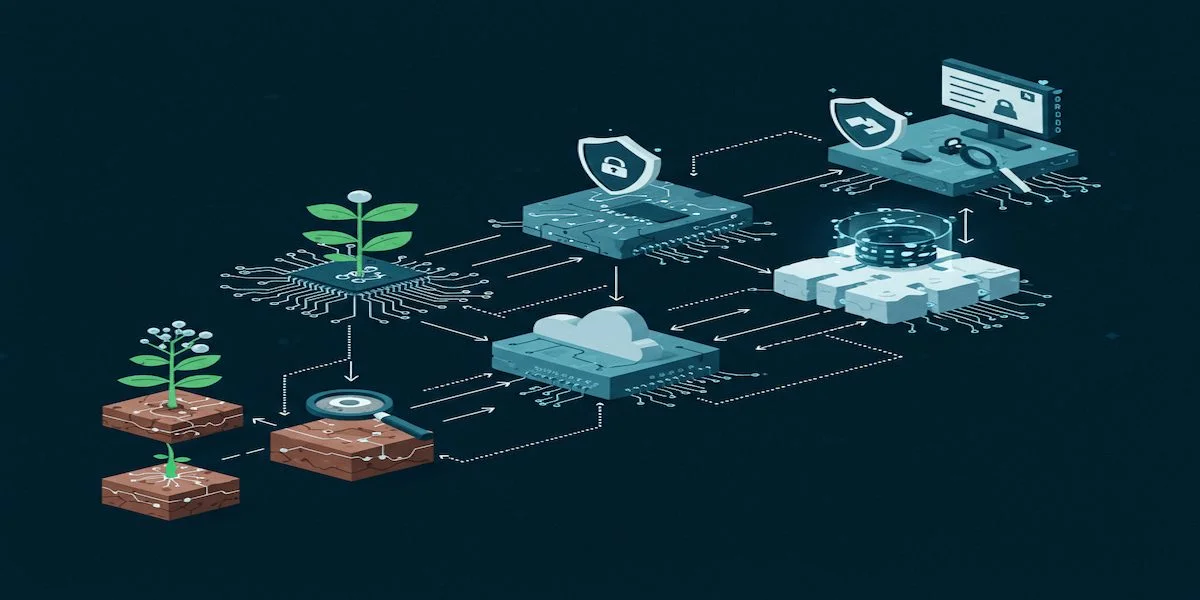
Imagine your SaaS product as a growing tree. In the early days, investors are primarily interested in whether the seed has sprouted and has healthy roots. As the tree matures, they want to see strong branches, resilient bark, and evidence that it can withstand storms and continue to bear fruit. Similarly, investor expectations regarding your technology evolve. What was acceptable for a proof-of-concept might become a significant red flag for a Series A investor looking for exponential growth. They move from assessing potential to demanding proven capability and future-proofing. This means your approach to technical due diligence must also mature alongside your business.
Why Early Preparation for Future Rounds is Key
The biggest mistake a SaaS founder can make is to only think about technical due diligence when an investor is knocking on the door. Proactive preparation is paramount. Building a scalable architecture, implementing robust security, and establishing efficient development processes from the outset, or at least early in your journey, will save immense time, cost, and stress down the line. It ensures that when you do enter a new funding round, your technical house is in order, allowing you to focus on demonstrating your vision rather than scrambling to fix foundational issues. A fractional CTO can be instrumental here, helping you anticipate future demands and build a resilient technical roadmap.
Seed and Angel Rounds: Initial Technical Assessment
At the earliest stages of funding – seed and angel rounds – investors are often backing the team and the vision as much as the product itself. However, even here, a foundational technical due diligence is essential. They’re looking for signs that your product is viable and that the technical team can execute.
Core Product Viability and Proof of Concept
In these initial rounds, investors want to see that your SaaS product actually works and solves a real problem. They’re less concerned with enterprise-grade scalability and more interested in the core functionality. This means:
- Working Prototype/MVP: Do you have a functional Minimum Viable Product (MVP) that demonstrates your core value proposition?
- User Feedback: Is there evidence that early users find value in your product?
- Technology Choice: Have you made sensible technology choices that support your current needs and offer a path to future growth, even if it’s not fully optimised yet? They’ll want to ensure you haven’t chosen an obscure or dying tech stack.
The goal here is to prove that your technical solution can deliver on its promise.
Early-Stage Code Quality and Foundational Architecture
While perfection isn’t expected, investors will still glance at your codebase and architecture. They’re looking for:
- Basic Organisation: Is the code somewhat organised and readable? A spaghetti-code mess, even in an MVP, can signal future problems.
- Sensible Structure: Does the application have a logical structure, even if it’s a monolithic design? They’re checking for fundamental design flaws that would necessitate a complete rewrite later.
- Security Awareness: Are there glaring security vulnerabilities that could put early users at risk? Basic input validation, secure password storage, and proper authentication are expected.
A fractional CTO can help ensure that even your early code has a solid foundation, avoiding the accumulation of crippling technical debt that could hamper future technical due diligence.
Basic Security Measures and Data Protection
Even at the seed stage, data security is a concern. Investors will want assurances that:
- User Data is Protected: Are you encrypting sensitive user data?
- Access Controls are in Place: Is access to your systems and data restricted to authorised personnel?
- Compliance Awareness: If you’re handling highly sensitive data (e.g., health, financial), are you aware of and beginning to address relevant regulations like GDPR?
While full compliance audits might be overkill, a demonstrated awareness and basic implementation of security best practices are crucial.
The Role of Your Fractional CTO at This Stage
At the seed and angel stages, a fractional CTO is invaluable. They can:
- Validate Technical Vision: Help articulate and validate your product’s technical vision to investors.
- Assess MVP Tech: Review your MVP’s codebase and architecture to identify immediate red flags and suggest quick wins for improvement.
- Advise on Tech Stack: Guide you in selecting appropriate technologies that balance speed-to-market with future scalability.
- Prepare Initial Documentation: Assist in compiling basic technical overviews and diagrams required for early technical due diligence.
They provide the technical gravitas and strategic foresight often missing in early-stage teams.
Series A: Scaling and Maturing Your Technical Stack
Moving into Series A, investors are looking for proof of traction and a clear path to significant growth. Their technical due diligence becomes far more rigorous, focusing on your ability to scale and operate efficiently.
Demonstrating Scalability and Performance
This is where the rubber meets the road. Investors want concrete evidence that your SaaS product can handle a rapidly expanding user base and increasing data volumes. They’ll examine:
- Infrastructure Scalability: How well does your cloud infrastructure (AWS, Azure, GCP) scale automatically? Do you have auto-scaling groups, load balancers, and distributed databases?
- Performance Metrics: Can you provide real-world data on response times, throughput, and error rates under load? Stress testing results are highly valued.
- Microservices/Modular Design: Have you moved towards a more modular or microservices architecture to allow for independent scaling of components?
- Database Optimisation: Are your databases optimised for high concurrency and large data sets? This is a frequent bottleneck.
A strong showing in this area is critical for successful technical due diligence at Series A.
Advanced Security Protocols and Compliance Readiness
Security expectations escalate dramatically. Investors will demand:
- Comprehensive Security Policies: Documented policies for data handling, access control, incident response, and employee security training.
- Vulnerability Management: Evidence of regular security audits, penetration testing, and a robust patching process.
- Compliance Certifications: Progress towards or achievement of relevant industry certifications (e.g., SOC 2 Type 1 or Type 2, ISO 27001) if applicable to your industry.
- Data Governance: Clear policies on data retention, anonymisation, and privacy.
Failure to demonstrate a mature security posture can be a deal-breaker.
Robust Development Processes and CI/CD
Investors want to see that your engineering team operates efficiently and predictably. They’ll look at:
- Mature SDLC (Software Development Life Cycle): Clear processes for requirements gathering, design, development, testing, and deployment.
- Automated Testing: A comprehensive suite of automated tests (unit, integration, end-to-end) integrated into your CI/CD pipeline.
- Continuous Integration/Continuous Deployment (CI/CD): Evidence of automated build, test, and deployment processes that enable frequent, reliable releases.
- Code Review Practices: How do you ensure code quality and knowledge sharing within the team?
These processes indicate a professional, well-oiled engineering machine, which is a key component of technical due diligence.
Anticipating Growth: Infrastructure and Team Capabilities
Beyond current performance, investors are keenly interested in your ability to sustain growth. This includes:
- Capacity Planning: Do you have a plan for future infrastructure scaling based on projected user growth?
- DevOps Maturity: Is your DevOps culture strong, enabling collaboration between development and operations for faster, more reliable deployments?
- Team Expansion Plan: How do you plan to grow your engineering team to support your roadmap? Do you have clear hiring profiles and onboarding processes?
- Technical Leadership: Is there strong technical leadership in place (whether internal or fractional) to guide the team through rapid growth?
Series B and Beyond: Enterprise Readiness and Strategic Vision
At Series B and later stages, your SaaS product is expected to be a mature, robust platform capable of serving large enterprises and potentially global markets. Technical due diligence at this level is exhaustive, focusing on resilience, efficiency, and long-term strategic vision.
Enterprise-Grade Security and Governance
Security becomes paramount, with expectations for:
- Advanced Threat Detection: Implementation of Security Information and Event Management (SIEM) systems and sophisticated threat detection capabilities.
- Regular Compliance Audits: Ongoing, rigorous audits for all relevant industry and regional compliance standards.
- Supplier Security Management: Processes for vetting and managing the security posture of third-party vendors and integrations.
- Internal Governance: Clear policies and procedures for data access, change management, and security awareness across the entire organisation.
This level of technical due diligence demands a proactive and comprehensive security programme.
Global Scalability and Resilience Planning
For companies targeting a global footprint, investors will examine:
- Multi-Region Deployment: Ability to deploy and operate your SaaS product across multiple geographic regions for disaster recovery and latency optimisation.
- Localisation Strategy: How your technical stack supports localisation for different languages, currencies, and regulatory environments.
- Advanced Disaster Recovery: Comprehensive disaster recovery plans with low Recovery Time Objectives (RTO) and Recovery Point Objectives (RPO), including regular drills.
- Business Continuity Planning: How the entire business would continue operating in the face of major disruptions.
Optimising for Cost and Efficiency
As your business scales, cost efficiency becomes increasingly important. Investors will look at:
- Cloud Cost Optimisation: Strategies for managing and optimising cloud spend (e.g., reserved instances, spot instances, serverless architectures where appropriate).
- Performance Efficiency: Continuous efforts to improve application performance, which often translates directly to lower infrastructure costs.
- Automation: Extensive automation of operational tasks to reduce manual effort and human error.
Long-Term Technical Roadmap and Innovation
Finally, investors at these later stages want to see a clear vision for the future of your product’s technology:
- Innovation Pipeline: How are you fostering innovation and staying ahead of technological trends?
- R&D Investment: Evidence of ongoing investment in research and development.
- Strategic Partnerships: How your technology enables strategic integrations and partnerships.
- Technical Debt Management: A proactive and continuous strategy for managing and reducing technical debt, ensuring the platform remains agile.
This holistic view of your technical strategy is integral to late-stage technical due diligence.
Common Technical Red Flags and How to Address Them
Throughout all stages of technical due diligence, certain issues consistently raise red flags for investors. Being aware of these and having a plan to address them is crucial.
Identifying and Mitigating Risks
- High Technical Debt: Unmanaged technical debt (poorly written code, outdated libraries, lack of documentation) significantly increases future development costs and risks. Mitigation: A clear plan for refactoring, dedicated “tech debt sprints,” and a fractional CTO to guide the process.
- Single Points of Failure: Any part of your system that, if it fails, brings down the entire application. Mitigation: Implement redundancy, load balancing, and distributed architectures.
- Inadequate Security: Lack of encryption, poor access controls, no incident response plan, or unaddressed vulnerabilities. Mitigation: Conduct regular security audits, implement robust security policies, and pursue relevant certifications.
- Lack of Scalability: An architecture that cannot handle increased user load without significant re-engineering. Mitigation: Proactive architectural reviews, stress testing, and cloud-native design principles.
- Poor Documentation: Lack of clear documentation for code, architecture, and processes. Mitigation: Implement documentation standards and make it a part of your development workflow.
- Over-reliance on Key Individuals: If only one or two people understand critical parts of your system. Mitigation: Cross-training, comprehensive documentation, and knowledge sharing initiatives.
- Outdated Technologies: Using deprecated languages, frameworks, or libraries that pose security risks or hinder future development. Mitigation: Plan for gradual migration and technology upgrades.
Proactive Communication with Investors
Transparency is key. If you have identified technical challenges or areas for improvement, communicate them openly and honestly. Present a clear plan for how you intend to address them, demonstrating your awareness and commitment to resolution. A fractional CTO can help you frame these discussions effectively, turning potential weaknesses into opportunities to showcase your strategic thinking and problem-solving capabilities. This proactive approach can significantly enhance investor confidence during technical due diligence.
Building a Future-Proof SaaS for Investment
The journey of a SaaS product from inception to a multi-million-pound enterprise is marked by continuous evolution, and your approach to technical due diligence must evolve with it. What satisfies an angel investor will barely scratch the surface for a Series B firm. By understanding the shifting expectations at each funding stage – from foundational viability in seed rounds to enterprise readiness in later stages – you can strategically build and refine your technical stack. Proactive preparation, a commitment to best practices in architecture, security, and development processes, and the expert guidance of a fractional CTO are your most powerful tools. Ultimately, mastering technical due diligence isn’t just about passing an audit; it’s about building a future-proof SaaS product that consistently attracts investment and achieves its full potential.
If you like what you have read and want to check out the services I offer, you can do that here or feel free to schedule a call.
